Commitment To Youth And Child Safety
We know that you place trust in the Y to help your child develop and thrive. Ensuring the safety and well-being of young people is foundational to everything we do at the Y to help them learn, grow and thrive We believe when you are well informed about safety protocols, it greatly assists our responsibility of remaining vigilant and aware of all individuals who potentially interact with children. The Sonoma County Family YMCA has a zero-tolerance policy for abuse (including sexual abuse) or mistreatment of consumers by staff, volunteers, and other consumers. Conduct that rises to the level of abuse by any of the above parties will result in intervention and/or disciplinary action, up to an including dismissal from employment (staff) or program (consumer). You are strongly encouraged to immediately report any deviation from these procedures.
How We Protect Youth
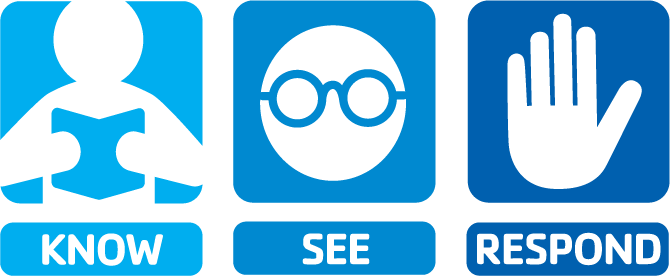
KNOW THE FACTS
We pledge to protect the children we serve—and we hope you will, too. We want all children to be safe. However, child abuse does exist, taking many forms:
Emotional abuse is the use of threats or words that can harm a child’s feelings and self-esteem and the withholding of love and support. Examples include ridicule, rejecting, blaming or communicating unrealistic expectations.
Physical abuse is the deliberate injury of a child by any person, including by another child.
Sexual abuse is any sexual act between an adult and a minor, and between two minors when one exerts power over the other. It also includes non-contact acts such as exhibitionism, exposure to pornography, voyeurism and communicating in a sexual manner by phone or Internet.
Child neglect is a form of abuse that occurs when a person responsible for the care of a child fails to provide necessary food, clothing, medical care, education, affection, shelter or supervision.
One in ten children will be sexually abused before their 18th birthday.
90% of child sexual abuse victims know their abuser.
Approximately 30% of children who are sexually abused are abused by family members.
60% of child sexual abuse victims never tell anyone.
False reports are rare. Research shows that only 4 to 8% of child sexual abuse reports are fabricated.
Statistics provided by Darkness to Light.
OUR SCREENING
The SCF YMCA has over 320 staff and volunteers working with youth in the many programs that we offer. To keep children safe, we follow a comprehensive screening process for potential employees and volunteers that includes a detailed application and interview process, reference checks, criminal background checks, and training.
TRAINING PROCEDURES
Through Praesidium, our Child Safety Partner all employees and volunteers complete a child abuse prevention training program. Supervisors and managers complete additional training to further promote a child-safe environment.
Additionally, all staff and volunteers are mandated to report any suspected child abuse.
All staff members and volunteers receive and sign an actionable code of conduct.
OUR POLICIES
The SCF YMCA has a zero-tolerance policy for abuse (including sexual abuse) or mistreatment of consumers by staff, volunteers, and other consumers. Conduct that rises to the level of abuse by any of the above parties will result in intervention and/or disciplinary action, up to an including dismissal from employment (staff) or program (consumer). You are strongly encouraged to immediately report any deviation from these procedures.
Comprehensive Child Protection policies are in place and enforced to ensure staff & volunteers are never alone with a child. In addition, we ensure that staff & volunteers do not develop relationships with children outside of our facilities and programs.
The "Rule of Three": Strict supervision policies that prohibit staff from being alone with a single child where they cannot be observed by others.
Staff & volunteers are prohibited from being one-on-one with a child outside of the YMCA (i.e. babysitting). Parents are encouraged to express concerns to staff members in charge or a Program Director.
All interactions with adults and children at our Y are designed to be observable and interruptible.
Mandated Reporting: All YMCA staff are trained to recognize warning signs and are legally mandated to report suspected abuse to supervisors and state authorities.
Digital and Physical Boundaries: Inappropriate physical contact (e.g., lap sitting) and private communication between staff and minors (such as unapproved texting or social media) are strictly prohibited.
WARNING SIGNS OF ABUSE
Abrupt changes in behavior, anxiety, clinging, aggressiveness or withdrawal
Discomfort with physical contact
Fearfulness or depression
Abuse of other children
Avoidance of a particular person or refusing to go to a friend’s or
Relative’s home for no apparent reason
Sexual language or behavior that is not age-appropriate
Unexplained bruises, welts, burns
Unkempt or malnourished appearance
Disturbed sleeping or eating patterns
Sexually transmitted diseases and infections
Why are children afraid to tell?
The abuser tells the child that his or her parents will be angry.
The abuser confuses the child about what is right and wrong.
The abuser tells the child that they will hurt his or her family member if they tell.
The abuser tells the child it is a game or a secret.
Children think it was their fault, or that they should have done something to prevent it.
The abuser may encourage the child to break rules set by their parents, causing the child to fear punishment if they tell.
OPEN COMMUNICATION - Talk to Your Child
The general rule is the more open communication you have with your child on serious topics like abuse and personal safety, the more likely your child will come to you for help and be able to say NO to potential abuse. A key to keeping children safe is a child’s ability to seek help. They need to know that there are adults at the Y and at home who will listen and respond in a supportive way.
Tips when talking with your child about difficult topics:
Start at a young age and be open to talking about their bodies and, when age-appropriate, about sex.
Teach them words that help them discuss their bodies comfortably with you, such as words to describe their private parts.
Stay calm and listen. If you react with anger or disbelief to a disclosure your child makes, your child can feel shame or guilt and can shut down.
Ask open-ended questions like, “What happened next?”
Teach your child that they have your permission to say “NO” if an adult or other child tries to touch the private parts of their bodies.
Share with your child that they can say “NO” to an adult friend or a family member, or an older child, if they act inappropriately.
Ask questions, if your child is resistant to being with a particular person.
WHAT TO DO? – Prevention tactics
Be proactive. Create an environment that encourages children to share their views and concerns and then really listen to them. Safety Rules – Go over safety rules with younger children:
Read this message to them: “My body belongs to me. If someone makes me feel uncomfortable, scared or hurt, or touches my private areas, I will yell ‘STOP’ and GO TELL an adult who listens. I have a right to be safe. I deserve respect.”
Tell them to check first with a parent or a trusted adult before going anywhere, changing plans, or accepting gifts from anyone.
Teach them that it’s not okay to keep secrets from you and that they can tell you the truth.
Tell them they can always tell a trusted adult if someone harms them or makes them feel uncomfortable.
Have children identify a trusted adult they can talk to.
Child sexual abuse reports should be made to the police and/or state child protective services.
Contact the Darkness to Light Helpline at 866-FOR-LIGHT or text LIGHT to 741741 to have questions answered by trained counselors at no charge.
Provided by Darkness to Light
INTERNET & SOCIAL NETWORKING SAFETY
The internet can place a child in danger. Set up rules before letting your child go online or using social networking apps.
Talk about who they can communicate with and what sites and apps they can use.
They should not download anything without permission.
Tell them never to share personal information such as their name, address, pictures, telephone number, parent’s work address or phone number, or the name and location of the school without a parent’s permission.
Encourage them to tell a trusted adult if they receive any message or come across anything that makes them feel uncomfortable, scared or confused.
They should know that they must never meet in person with anyone they met online.
REPORTING ABUSE
In Sonoma County call the 24/7 confidential CPS Child Protection Hotline at (707) 565-4304 or toll-free at (800) 870-7064.
For General & Out-of-Area Reports - If the child resides in a different county or state, you can reach the 24-hour Childhelp National Child Abuse Hotline by calling or texting (800) 4-A-CHILD (422-4453). They provide crisis counseling and can route you to the appropriate local child welfare agency.
Report ONLINE - https://forms.cloud.microsoft/r/ejuPNeezqU
YMCA PARTNERS IN PROTECTING YOUTH
Praesidium is a national leader in abuse risk management, to implement rigorous, research-based child safety standards. This partnership provides all local YMCAs with specialized tools, ongoing staff training, and an independent accreditation process to proactively prevent child abuse and ensure a secure environment.
Darkness to Light is a nonprofit organization with the mission to empower adults to prevent child sexual abuse through awareness, education, and stigma reduction. Darkness to Light’s flagship program, Stewards of Children®, is an evidence-informed, award-winning training that teaches adults to prevent, recognize, and react responsibly to child sexual abuse. More than 1.9 million adults have been trained using Darkness to Light trainings.
For more information, visit www.D2L.org.